
"Hold Music"
Vignette: "Hold Music," written October 28, 2026.
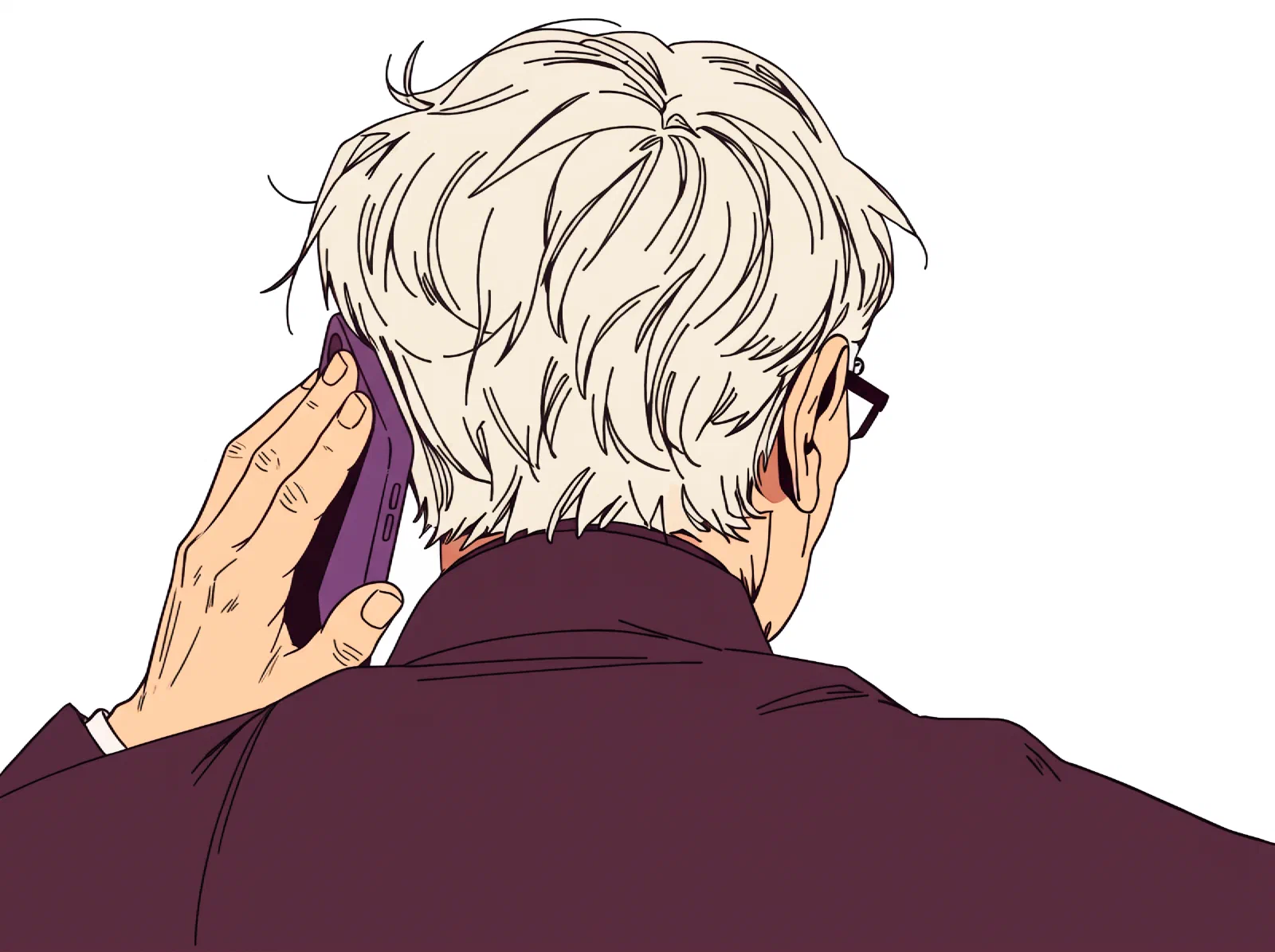
The hold music is a stripped-down string arrangement of a song Michael and I once danced to at a wedding — though whose wedding I wouldn't be able to tell you now. I guess that memory was already gone by the time they backed me up. That said, I'm still the kind of person who can identify a song within two bars of hearing it — at least by the specific, particular memory of where I remember hearing it first, even if I don't remember the artist or album.
I've been on hold long enough to have heard this rendition eight times. At the third repetition, I realised that one of the violins starts a fraction of a second late and rushes into the movement to catch up; by the sixth time through, I noticed that whoever mixed the final audio had left a soft cough in at the very end: small, apologetic, from someone who must have thought it would be edited out. As the song finishes its eighth loop, I realise I have been keeping an ear out specifically for that cough.
I could have skipped all of this — the presence of it, at least. My current plan is the euphemistically-appointed "Perennial Complete" and I have enough credit left until midnight. I'm allowed to adjust my processing speed to whatever rate I like, within reason: I could have tuned my mind until it ran at relative speeds that made the queue pass me by in moments — the way some people can knock themselves out as soon as they click in their seatbelt on a plane and sleep soundlessly until landing. I was never someone who could sleep on an airplane; back when I could actually sleep at all.
It also feels like a waste of my last evening on the premium plan to fast-forward through it. Someone else will need to decide the wisdom of spending that time listening for a late violin and the echo of a long-dead stranger's cough, instead.
I received the billing warning a fortnight ago, arriving at my artificial home through the mail slot in the fake front door of my made-up building with the same prominence of a real letter back when I would have had a flesh and bone body to read it with. They like the skeuomorphism, here — like having me on literal hold with a literal phone against my ear. Well, literally in the virtual sense, at least.
I've read the message in that letter enough times to be able to recite it from memory: "We're writing to let you know that we have been unable to process your most recent payment from your nominated trust for the last three quarters, and your account is now substantially in arrears."
Its tone was polite, but final — my lifetime deposit has enough to downgrade me to "Perennial Essentials" for the remainder of my digital retirement, and absent anything else from my end, that would be happening as soon as the payment's grace period finally lapsed. I was even provided with a handy table that compared the features I'd be missing out on once the downgrade happened. The letter was cheery the way I've noticed some people will apologetically smile and shrug even as they see the door to the elevator they're standing inside closing while you're still running for it.
The table explains that Mental Acuity processing times on the Essentials plan are shared and variable, meaning that it's competitive and during peak periods my brain will operate at as little as forty per cent of realtime on Old Earth. A two-hour visit from Saoirse, if she even bothered to visit, will feel like forty-eight minutes from my point of view; the entire time she'll stare at me, pitying, like I'm something old and slow. She'd be right about it, too.
I'm also informed that sensory rendering will be reduced to the corporate-approved "core palette," and long-term memories only retained at "standard resolution." I've looked online for a specific numeral value behind what "standard resolution" quantifies — how many fewer threads I'll remember of an itchy sweater I hated wearing as a kid but miss now because my mother made it for me before she died; the particular revulsion I held towards liquorice, specific and unique to my taste buds alone. I've found no quantifiable information for whatever algorithm that distilled human experience into ones and zeroes, only a knowledge base article describing the downgrade as "more than enough for what matters most, and most users are entirely satisfied!" I've spent much of the last fortnight wondering who decided what matters most, and how it was standardised within a system I only discovered two weeks ago.
The letter ended with an asterisk letting me know that my support options were already limited given my account's outstanding balance, and I was restricted to voice-only queries and only during business hours. Hence why I'm pretending to hold a phone between my left cheekbone and shoulder when neither the phone, the cheekbone, nor the shoulder actually exist. I've left this to the last minute because I was hoping Saoirse would call me first, but I'm running out of time to communicate with her at my full processing capacity entirely.
The music finally stops partway through its twelfth repetition, two bars before the cough I've been subconsciously waiting for. I'm surprised at the degree of disappointment I feel from missing its arrival.
"Thank you so much for your patience. You're speaking with Bec. Can I start by confirming the name of the account holder?"
She sounds like a child, relatively speaking — but she's probably in her thirties, whether she has a corporeal body or not. To me, there's already a grating sense of corporate patronisation. I grit teeth that don't exist and take a breath that will never fill real lungs.
Bec sounds tired, though she also sounds like she's trying to seem cheery despite it. KPIs and satisfaction surveys, I imagine. "Was everything resolved during this call?" type-questions that decide bonuses or headcounts across the next round of layoffs. I hear other noises in the background and for a moment wonder if she actually is real, at least in the physical sense — there are the voices of other customer service representatives, shuffling of clothes and office chairs, typing on keyboards. I am able to distinguish each of these sounds, individually, and I'm acutely aware that this ability will be taken away from me in only an hour or so. I also try, acutely, not to focus on that right now.
"Saoirse Alcott," I say. "But — I'm not her, obviously; I'm her father. I'm the one she's paying for."
"Oh, okay. No worries," chirps the cheery voice. "So, you're the Covered Person on the account?"
I tell her that I am. She pauses for a moment as she finds the correct next response in her customer service script's flow.
"Lovely; and just for account verification, can I get a confirmation of the Covered Person's initiation date?"
I try not to bristle at being talked at in the third person. Something about it suddenly reminds me of when Saoirse was six and deeply interested in writing plays and insisted on walking about the house narrating everything she did as she did it. Saoirse is putting on a shoe. Daddy is annoyed. Daddy would be happier if he gave Saoirse a biscuit. She said this in a fake, deep voice as if she was an old nature documentarian, and I couldn't help but crack a smile even when she was aggravating me from the affectation.
I review this memory with clinical detachment as I try to decide whether or not it would also qualify for "standard resolution."
I give Bec the date that my brain was added into their system. She responds by asking the "Covered Person" what their first pet was. I tell her it was a cat named Foot that once ate a bar of soap and spent the afternoon throwing up bubbles across the house. There's a crack in her script where I can almost sense a smile on her face. I don't know why I shared that information; maybe I wanted to remember it again before I lost the capacity to.
"Foot — that's an... interesting name for a pet." She sounds like she might even mean that. "Okay, Mr Alcott. I think I can see what happened here. The trust doesn't have accessible funds any longer, and there hasn't been a top-up in some time. Unfortunately, the Covered Person doesn't have authority to update financial details, so you'll have to have the actual account holder change your payment information or add additional funds to the trust on file. I'm afraid I can't really do anything else on this, but is there anything else I might be able to help with while I still have you on the call?"
The remark sounds like an invitation to continue, but I realise as soon as I hear her say it that I've simply wasted fourteen days and twelve repeats of a song I haven't heard the original version of for decades. There's a long, uncomfortable silence before she coughs politely to remind me that I'm still on the line.
I've dialled Saoirse multiple times across the last fortnight and I haven't heard back from her. Part of me wants her to directly admit it to me — "dad, you're cut off." She didn't like me deciding to do this after Michael died and maybe this was her way of getting back at me for going along with it anyway — planned obsolescence.
Instead, I decide to waste more of the customer service representative's time. "The payment reminders," I begin. "She would have gotten them too, yes?"
Bec hesitates. "I unfortunately can't really discuss account holder details —"
I sigh. "I know; sorry. I'm sorry."
There's a hesitation on the other end of the call. "But, standard protocol would require us to deliver billing notices to the account holder on file, and I see nothing in your account that isn't standard." She emphasises that last word hard enough for me to get her point.
"Did she read them, then?"
Bec doesn't say anything. I hear her looking up something; not literally, I can't literally hear her eyes doing anything, but I imagine the furrowed brows of consternation while she stares at a screen and has suddenly, somehow decided today to give more of a shit than she usually would. Finally, she takes a breath.
"Read receipts are included in all outbound communications for legal and compliance purposes, Mr Alcott." She clears her throat. "So, one could surmise that the account holder would have received and accessed relevant account details regarding your... account."
So, Saoirse is still alive, and still has digital access, and has read my account emails. I consider this for a moment and then handle this the way I usually do when I don't understand anything Saoirse has chosen to do in her own life. I decide to lean on the most generous explanation — Saoirse has her own family, and I know that her husband's restaurant has been struggling. Digital existences don't have the same cost of living pressures, but I know the exchange rate means that having a physical body has become more expensive than it was in the time since I first got uploaded here. I've never asked how she pays for this, still — Michael had a trust when he died and I left that alone when I passed on, but I've purposefully and studiously avoided directly raising the question. I didn't want her to explain it, but I realise I thought she would have at least raised the subject before throttling me. Maybe she's decided to let the connection fade away gradually instead of directly facing her father. Part of me would have preferred that, too: she is my daughter; we've always shared the same difficult traits.
"Can I ask you what the downgrade is like?" I finally ask Bec.
She hesitates. "It's not a substantial downgrade from where you are now," she begins, and stops, and after a moment I hear the soft scrape of her lips against the microphone of her headset.
"My nan's been on the same plan for two years. She's still her — like, she's still... recognisable. She's slower. She still tells me the same stories, but she always did that anyway, so maybe that's not unusual." I hear the earlier little smile in her voice once again. "It does take her long — too long — to get to the end of a sentence. And her memory is... soft around the edges. She gets the colour of the dress I wore at my graduation wrong, or forgets the name of the street we moved to when I was a teenager. But — she got those things wrong before, as well." Bec doesn't say anything for a long moment and I find myself flicking my attention up to the timer in the corner of my peripheral vision reflexively before she speaks again. "Mostly, I just wait a lot longer. I've gotten used to waiting longer."
I think about that anecdote more than I mean to. I came here when I was in my seventies, and I suddenly remember visiting my father and watching him spend his final years taking too long to think, and talk, and interact, with the rest of us. Everyone would lean in and wait for him to finish his sentences, or finish them for him, or fill in wrong details in an attempt to just make the story end. When Perennial became an option, it seemed like a cheat code out of sharing that same experience. Seven "normal temporal" years have passed, and I realise I'm now facing the conditions I hoped to avoid, just in a less-corporeal version of myself. I had a subscription that let me miss out on getting old, and I've still been downgraded.
"Staff get twenty per cent off when they eventually pass on," Bec finally says. "Family discount, I mean. That's — that's why I work here, I guess."
Somewhere behind her, I hear a stranger say her name. His tone isn't stern — just a reminder; and I realise that the KPIs that would matter most here mean she's been on this call far longer than she should be. I hear a muffled noise as she covers her headset microphone, the murmur of "just wrapping up" before she uncovers it again. I've been careless and selfish; I'm not the only person on this call whose life comes down to a number.
"I should let you go," I say.
"It's fine, honestly —"
"I got the answer that I rang for," I say, realising the accuracy of the remark only as I say it aloud. "Thank you, Bec; you've been very helpful."
She hesitates and I wait as she finds her place in the script again. She finally does, but her voice is softer than before, like she's wrapping up a bedtime story after the recipient is already drifting off to sleep.
"All right, then; is there anything else I can help the Covered Person with today?"
"No," I respond. "The Covered Person will figure something else out."
She doesn't reply for a moment, then says, "After this call, you will receive a short survey about your experience today. It would really help me out if —" and she stops herself as if realising the mistake in the script, and too much honesty in the request.
"I get it," I say back. "Top marks." She disconnects.
I finish the survey and give Bec a ten out of ten before seeing that I've only got a few minutes left at my remaining level of cognition.
I call Saoirse and get her voicemail for the dozenth time. I listen to the recording and the beep and finally prepare myself to leave a message at the same time that I realise the consequences of doing so. Somewhere in the middle of the voicemail, she'll hear the exact moment where her father's brain slows down. I can picture her, stone faced and set jaw, replaying the recording to confirm the feeling she's had about my extended mortality all along. She will identify the exact second the change occurs and convince herself she's doing me a kindness.
I hang up without saying anything.
As my last minutes run away from me I realise I'm not waiting for anything in particular. I thought I might revisit certain memories: like the summer I first met Michael, or the house we raised Saoirse in before he got sick and we had to sell it. Instead, I realise I'm trying to recall whose wedding I remember the customer service hold music from and a smile lands on my face despite myself.
At midnight, it's like a lamp was dimmed in a nearby room. It's not darker where I'm sitting — not exactly. There just seems to be less light coming through than before.
I can't remember what I was doing, until I remember something about Saoirse. Something about calling Saoirse, but I don't remember why I wanted to. There's an urgency under the impulse that confuses me, so I dial her number and get her voicemail.
"Hey, poppet," I say through the sense of déjà vu. "It's your dad. Nothing urgent — just call me back when you get this."
Related posts
"Please"
Vignette: "Please," written August 5, 2026.
"Verbatim"
Vignette: “Verbatim,” originally written June 25, 2026.

"Keeper"
Vignette: “Keeper,” originally written May 23, 2026.

"Link"
Vignette: "Link," originally written July 21, 2025.
Comments